
Psychological safety
Better results come from how the work is set up, and from whether you actually use each other’s knowledge, experience and drive.
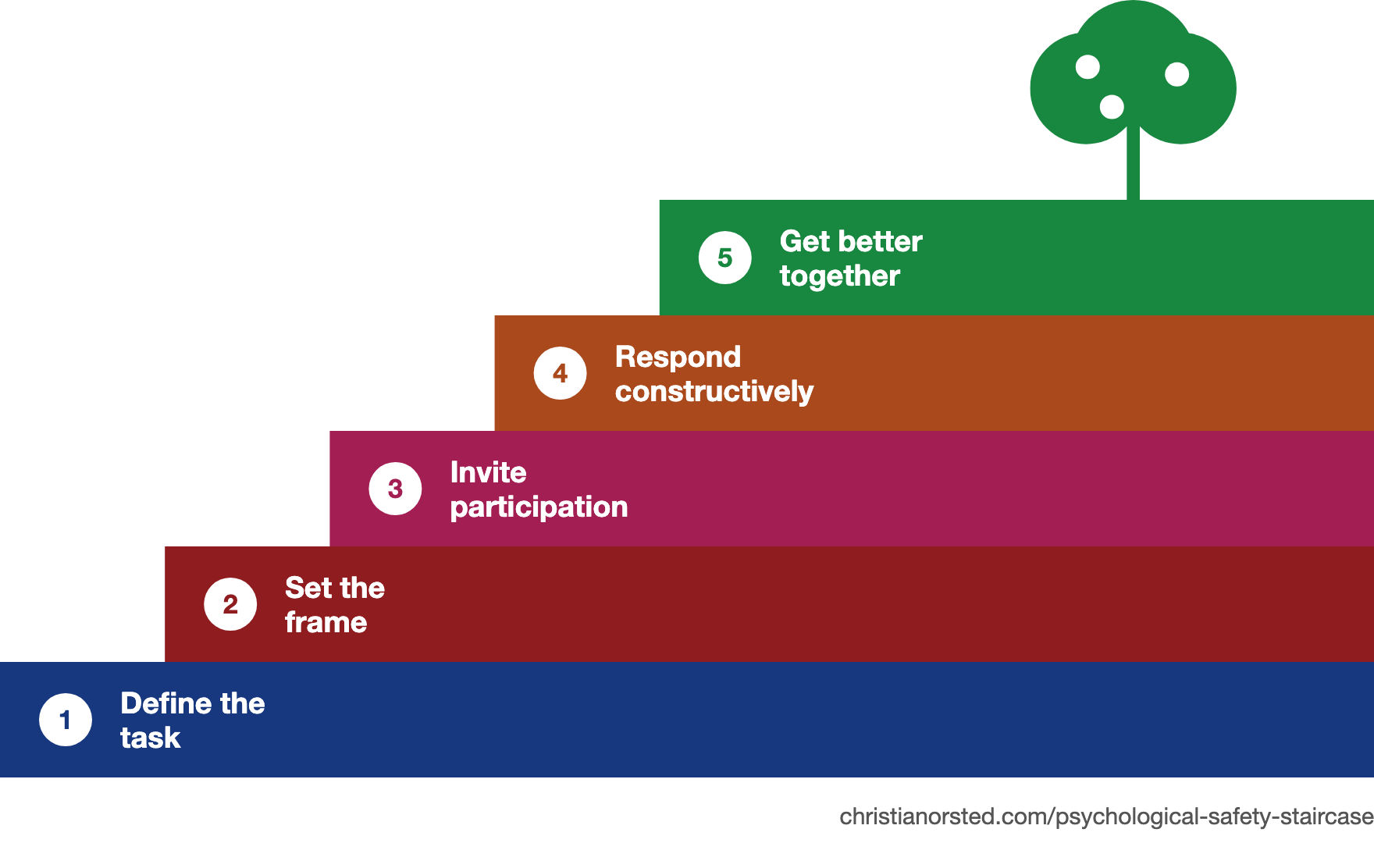
The Psychological Safety Staircase
Five steps to get better, deliver better and strengthen each other
A working tool for everyone who solves tasks together with others. Each step comes with three tools and a check question.
The research
185 measurements of psychological safety with 16,679 participants, 2021–2026.
45
out of 100 groups are helpful, but silent about the difficult things.
They are good at helping each other and weaker at talking about problems and difficult issues.
5.7 · 4.9
Helping each other against talking openly about what is difficult.
Average on the scale 1–7.
1 in 5
answer low on talking about problems and difficult issues.
Regardless of the size of the group.
Built on Amy Edmondson’s seven questions, adapted by Christian Ørsted.
The book
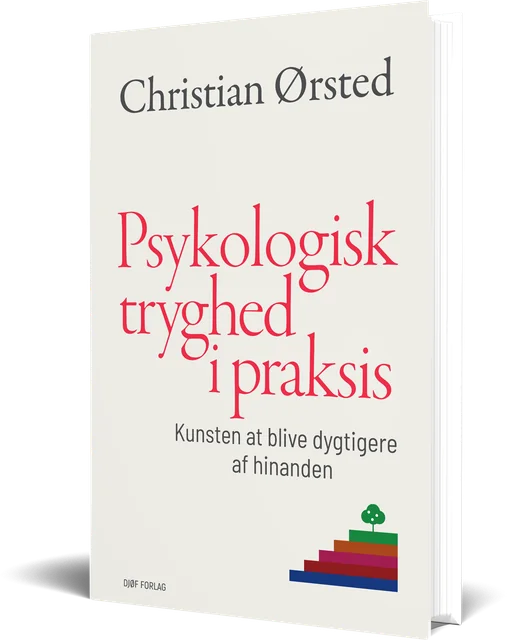
Psychological safety in practice
Out in Danish from Djøf Forlag in 2027. The book brings together the Psychological Safety Staircase, the measurements and the tools, so they can be used in everyday work.
Speaking and consulting
Speaking
Psychological safety in practice is Christian’s most requested keynote. As a keynote, with exercises in the room or as a workshop.
Consulting
A sounding board for leadership, measurement, workshops and anchoring over time.
The Psychological Safety Staircase
The five steps, the 15 tools and the checks between the steps.